Planning a tree planting program that survives its first Perth summer
Trees planted in winter meet their first dry summer months later. Stock size, planting depth, mulch and watering decide how many are still alive come March.
Planning a planting program for its first summer
Trees planted through a Perth winter look fine in September. The test comes in January and February, when the soil dries out and the heat sits over the site for weeks. Most losses in a planting program happen in that window. The decisions that prevent them are made months earlier, at planning and planting.
Plant in the right part of the year
Winter planting gives roots the longest run before the first dry spell. The soil is damp, rain does part of the watering and the plant establishes while demand is low. Planting into spring narrows that window. Planting into summer means hand watering everything from day one, at far greater cost.
- Plant through the wetter months wherever the program allows.
- Prepare the ground before the stock arrives on site.
- Order stock early so species choice is not forced.
- Set the watering plan before the first tree goes in.
Planting depth causes more quiet failures than anything else. Set the root ball too deep and the trunk sits in damp soil. Set it too high and the ball dries out from the sides. The top of the root ball should finish level with the surrounding soil. Backfill firmly enough to hold the tree, then water it in to settle the soil.
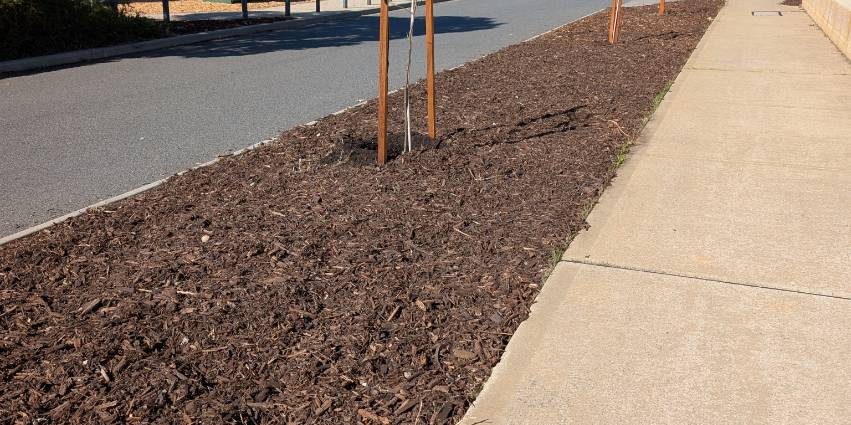
Mulch does the work you cannot see. A generous ring around each tree holds moisture in the sandy soils common across Perth and keeps the surface temperature down. Keep it clear of the trunk itself. Top up before summer, not after, because mulch breaks down and thins out over the growing season.
Watering through the first summer
New trees need water through their first two summers, not just the first. Deep and less often beats a light sprinkle every few days, because it draws roots down instead of holding them near the surface. Decide who does the watering and how it is checked before planting starts.
“A planting program is not finished when the last tree goes in. It is finished when those trees make it through their second summer.”
Stakes and guards need reviewing as well. A stake left on too long stops the trunk building strength. Guards protect young stock from mowers and from foot traffic, but they trap heat if they are the wrong type. Put a review date in the program rather than leaving them in place indefinitely.
Stock size and what it costs you later
Advanced trees give immediate presence and suit streetscapes and entries. Tube stock costs far less per plant and often establishes faster, because the root system is smaller relative to the top growth. On a large council program, tube stock lets you plant more ground for the same money and accept some losses.
- Use advanced stock where the space needs to read as finished.
- Use tube stock for volume planting and revegetation.
- Match species to the soil and exposure on that site.
- Order a small percentage extra to cover replacements.
Access and coordination on site
Large plantings need vehicle access, water and somewhere to place stock. Sort that out with the site manager before the trucks arrive. Our crews work between 07:00 and 17:00, which usually allows planting to fit around normal site activity.
Checking the result
Walk the planting in late autumn and count what survived. Note where the losses cluster, because they usually share a cause such as exposure, poor soil or missed watering. Feed that into the next round. Use the contact form to talk through a planting program for your sites.

Leads mowing, hedge trimming and weed control crews on aged care, childcare and council sites.